
SFP vs SFP+ vs QSFP: Simple Guide for Enterprise Fiber Networking
Learn the key differences between SFP, SFP+ and QSFP transceivers and how to choose the right fiber networking solution for your enterprise.
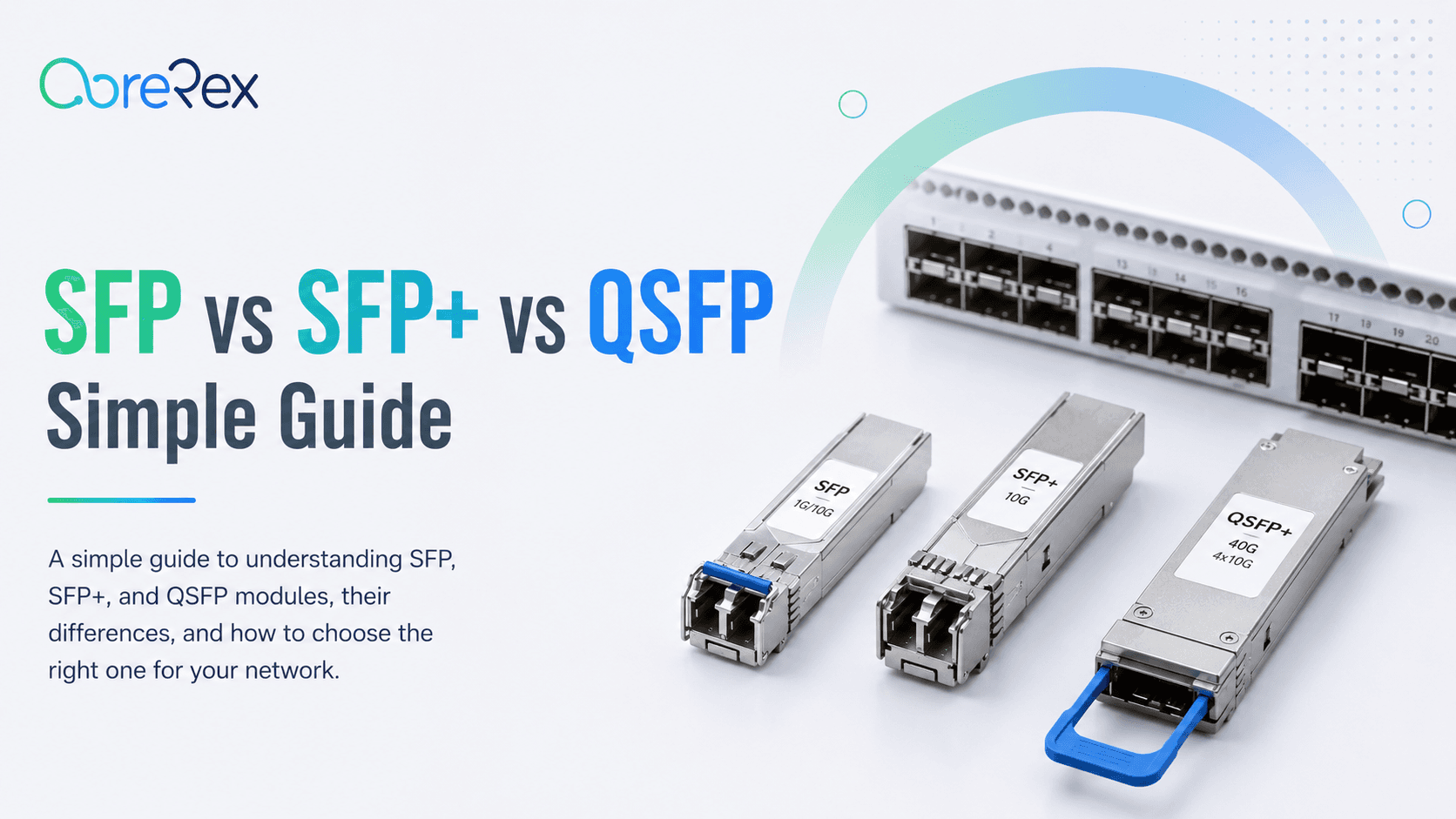
When planning a data‑center upgrade or a campus‑wide fiber rollout, the choice of optical transceiver can have a direct impact on performance, scalability, and total cost of ownership. This guide demystifies the three most common form factors—SFP, SFP+ and QSFP—so procurement teams can make informed decisions for their fiber networking projects.
Understanding the Basics of SFP, SFP+ and QSFP
What is an SFP?
The Small Form‑Factor Pluggable (SFP) is a hot‑swappable transceiver that converts electrical signals to optical signals for transmission over fiber. Originally designed for 1 Gbps Ethernet and Fibre Channel, the SFP’s compact size (≈13 mm × 56 mm) makes it a versatile choice for a wide range of switches and routers.
Evolution to SFP+ and QSFP
SFP+ (enhanced SFP) retains the same footprint but adds support for higher line rates—typically 10 Gbps and, in some implementations, up to 16 Gbps. QSFP (Quad Small Form‑Factor Pluggable) expands the form factor to accommodate four lanes of data, enabling 40 Gbps, 100 Gbps, and beyond. The “quad” design allows higher port density on the same chassis space, which is a key factor in modern data‑center architectures.
Data Rate and Bandwidth Differences
Understanding the speed capabilities of each module helps align the transceiver with the intended application.
- SFP: 1 Gbps (standard Ethernet), 2 Gbps (some Fibre Channel), up to 4 Gbps in specialized variants.
- SFP+: 10 Gbps (10 GbE, 8 Gb Fibre Channel), with optional 16 Gbps support for emerging standards.
- QSFP: 40 Gbps (QSFP‑40G), 100 Gbps (QSFP‑100G), and newer QSFP‑DD modules that reach 200 Gbps or 400 Gbps.
When bandwidth growth is a priority, QSFP offers the most headroom, but SFP+ can be a cost‑effective bridge for environments transitioning from 1 Gbps to 10 Gbps.
Physical Form Factor and Port Density
Space constraints inside chassis and the need for high port counts influence the choice of transceiver.
- Size: SFP and SFP+ share the same compact dimensions, while QSFP modules are roughly three times larger, occupying the space of three SFP slots.
- Port density: A QSFP port can be broken out into four SFP+ ports via a breakout cable, providing flexibility for mixed‑speed deployments.
- Power consumption: QSFP modules typically draw more power per port than SFP+, which may affect cooling and power budgeting in dense switches.
Compatibility and Interoperability
Vendor‑neutral procurement requires confidence that the selected transceiver will work across multiple hardware platforms.
- All three form factors adhere to industry standards (MPO, LC, etc.) for fiber type, ensuring that the same cable can be used with different vendors.
- Backward compatibility is limited: an SFP+ port can accept a legacy SFP module (often at reduced speed), but an SFP port cannot accept an SFP+ or QSFP module.
- When using QSFP, verify that the switch or router supports the specific QSFP variant (e.g., QSFP‑28 for 100 Gbps) and the desired optical wavelength (850 nm, 1310 nm, 1550 nm).
Choosing the Right Module for Enterprise Procurement
Assessing Current and Future Bandwidth Needs
Map out the traffic profile of each application—storage, virtualization, high‑performance computing, or user access. If the workload is expected to exceed 10 Gbps within the next 2‑3 years, investing in QSFP infrastructure can avoid costly retrofits.
Infrastructure Considerations
Evaluate existing cabling, rack space, and power availability. Re‑using existing single‑mode fiber can simplify upgrades, but multimode fiber may limit the maximum reach of higher‑speed modules.
Consider the following decision matrix:
| Scenario | Recommended Form Factor |
|---|---|
| Edge switches serving desktop users (≤1 Gbps) | SFP |
| Aggregation layer with 10 Gbps uplinks | SFP+ |
| Core spine with 40 Gbps or 100 Gbps fabric | QSFP |
Cost and ROI Considerations
While the unit price of QSFP modules is higher than SFP+, the total cost of ownership can be lower when factoring in port density and future‑proofing. Fewer ports mean reduced switch chassis costs, simplified cabling, and lower power consumption per gigabit of throughput.
Procurement teams should also account for:
- Spare inventory strategy—standardizing on a single form factor can streamline stock management.
- Warranty and support agreements—ensure the vendor offers a clear return‑to‑vendor (RTV) policy for defective transceivers.
- Lifecycle alignment—choose modules that match the expected refresh cycle of your networking hardware (typically 3‑5 years for enterprise switches).
Conclusion: Matching Transceiver Choice to Business Goals
There is no one‑size‑fits‑all answer for SFP vs SFP+ vs QSFP. The optimal selection balances immediate performance requirements, projected growth, physical constraints, and total cost of ownership. By understanding the speed, form factor, and compatibility nuances of each transceiver, enterprise IT and procurement leaders can build a fiber networking architecture that scales efficiently and delivers reliable service for years to come.